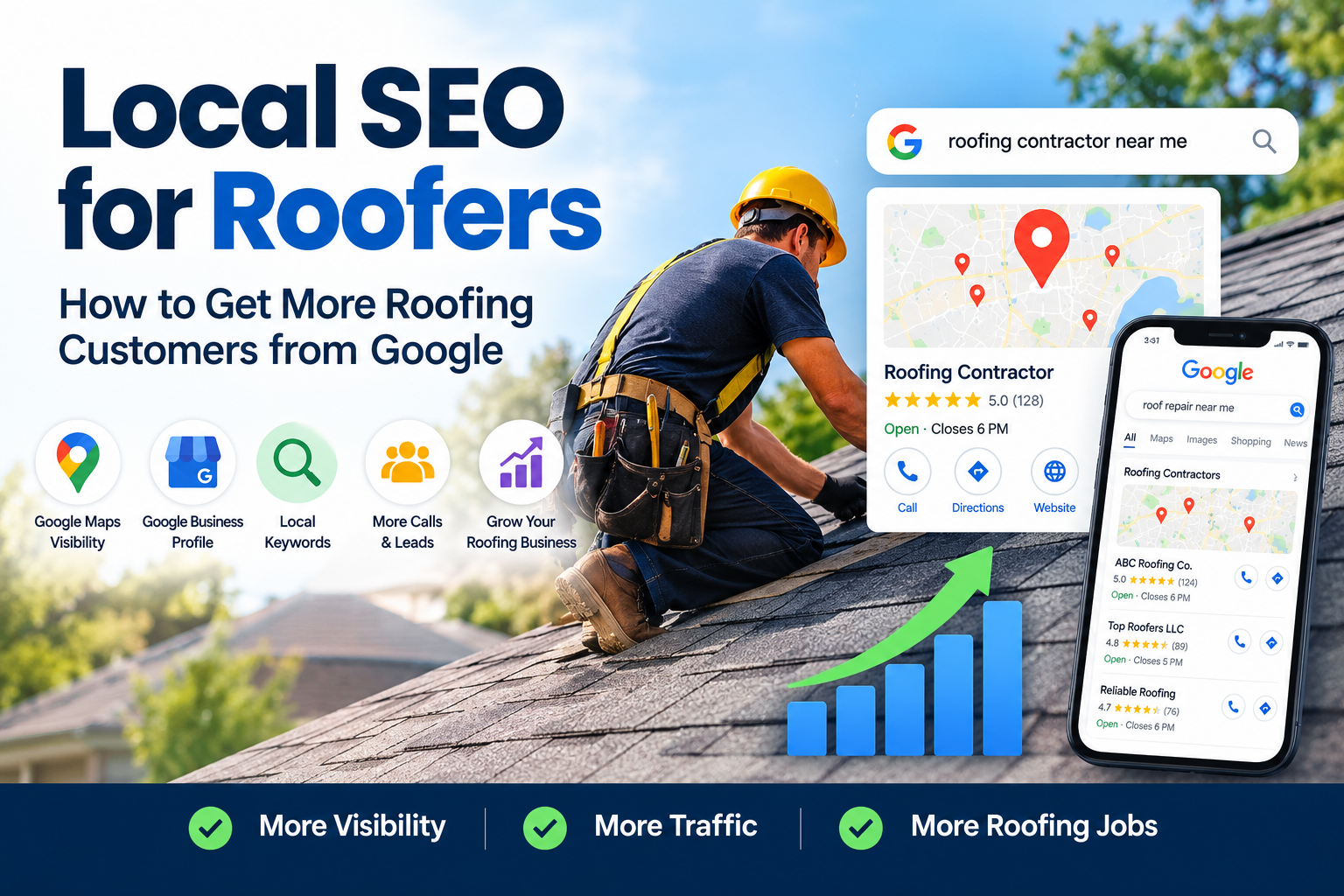
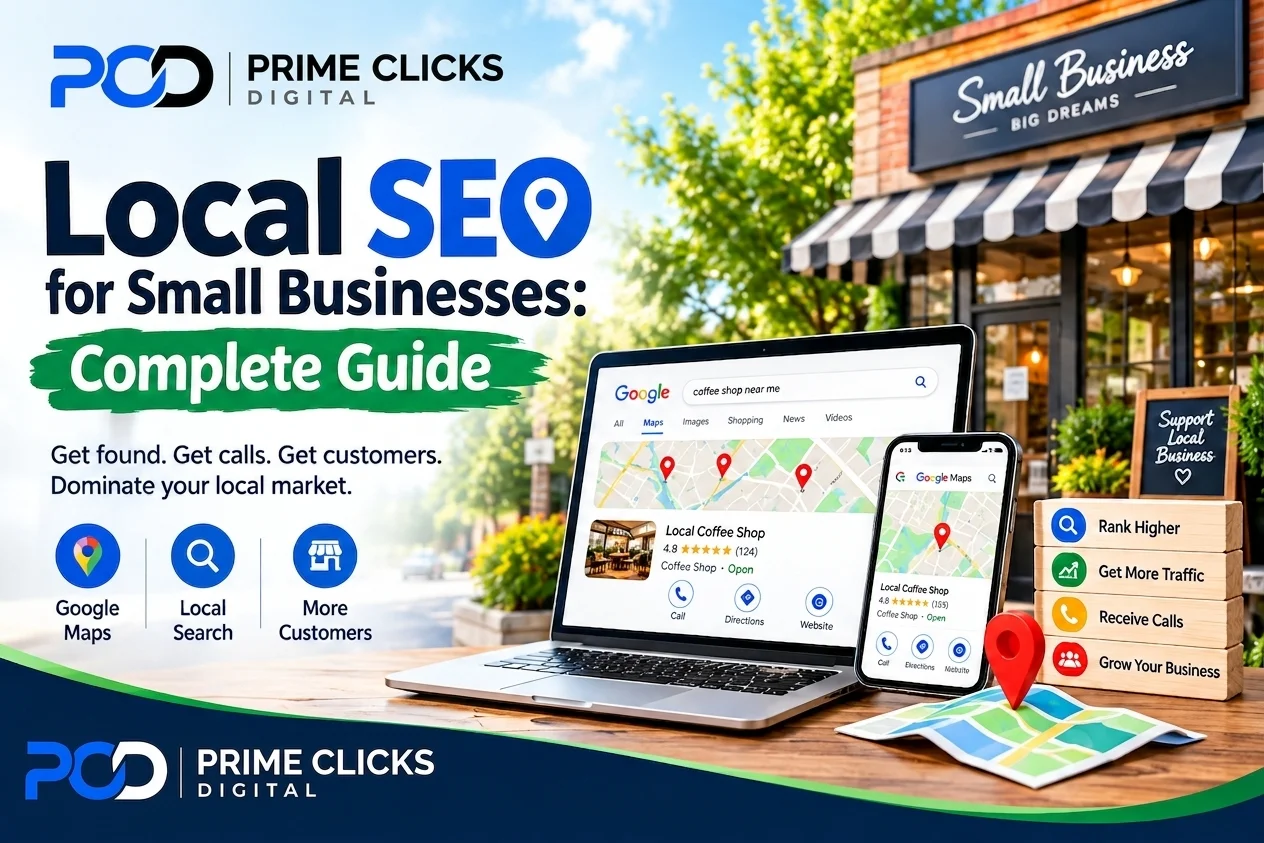
Local SEO for Small Businesses: Complete Guide
Local SEO is one of the most effective ways for small businesses to attract customers from their local area. Whether you run a plumbing company, dental clinic, roofing business, law firm, restaurant, HVAC company, electrician service, real estate agency, or another local business, appearing prominently in Google Search and Google Maps can help you reach people who are actively looking for your products or services.
Unlike traditional SEO, which often focuses on ranking a website for broad keywords, Local SEO focuses on increasing a business’s visibility in location-based searches.
For example, someone searching for:
- plumber near me
- dentist in New York
- best HVAC company in Dallas
- roofing contractor near me
- local electrician
- Italian restaurant in Chicago
is usually looking for a business they can contact or visit.
This makes local search particularly valuable for small businesses because it can connect your business with customers who already have a specific need.
In this complete guide, you will learn what Local SEO is, why it matters, how Google local rankings work, how to optimize your Google Business Profile, how to build local citations and backlinks, how reviews affect local visibility, and what you can do to improve your local search presence.
What Is Local SEO?
Local SEO is the process of optimizing a business’s online presence so it can appear more prominently in local search results, Google Maps, and location-based searches.
Local SEO helps search engines understand:
- What your business does
- Where your business operates
- Which products or services you provide
- Who your ideal customers are
- Which geographic areas you serve
- Whether your business is trustworthy and relevant
For example, if you operate a dental clinic in Miami, you may want to appear when people search for:
- dentist in Miami
- dentist near me
- emergency dentist Miami
- family dentist Miami
- teeth whitening Miami
- dental clinic near me
A strong Local SEO strategy helps Google understand that your business is relevant to these searches.
Why Local SEO Is Important for Small Businesses
Large companies often have significant marketing budgets and strong domain authority. Small businesses may not be able to compete with them for every national keyword.
Local SEO provides an opportunity to compete within a specific geographic market.
1. Reach Customers Near Your Business
Local searches often have strong purchase intent.
Someone searching for “plumber near me” may need a plumber immediately. Someone searching for “best dentist in Austin” may be researching where to schedule an appointment.
By appearing when these searches happen, your business can reach potential customers at an important stage of the buying journey.
2. Increase Google Maps Visibility
Google Maps has become an important discovery channel for local businesses.
Customers can use Maps to find:
- Business locations
- Phone numbers
- Websites
- Opening hours
- Directions
- Reviews
- Photos
- Services
Optimizing your Google Business Profile can therefore help increase your visibility in both Google Search and Maps.
3. Generate More Calls and Leads
Local search visibility can lead to actions such as:
- Phone calls
- Website visits
- Direction requests
- Appointment bookings
- Quote requests
- Contact-form submissions
- Store visits
For service-based businesses, these actions can be more valuable than simply increasing website traffic.
4. Build Local Trust
A complete business profile, positive customer reviews, professional photos, accurate information, and mentions from reputable local websites can help establish credibility.
Customers are more likely to consider a business when they can easily verify important information about it.
5. Compete With Larger Businesses
A small local business does not necessarily need to compete nationally.
A roofing company in Houston, for example, can focus on becoming highly relevant for searches related to roofing services in its service area.
This geographic focus can make Local SEO particularly useful for small and medium-sized businesses.
How Does Local SEO Work?
Google’s local search systems generally consider several important factors when determining which businesses are relevant to a local search.
Three commonly discussed concepts are:
Relevance
Relevance refers to how well a business matches what someone is searching for.
If someone searches for “HVAC repair,” a business that clearly offers HVAC repair services is more relevant than a business that only provides unrelated services.
Your website and Google Business Profile should clearly communicate:
- Business category
- Services
- Products
- Service areas
- Business description
Distance
Distance refers to how close the business is to the location associated with the search.
For searches such as “coffee shop near me,” proximity can be especially important.
Businesses cannot completely control this factor, but they can ensure that Google has accurate location and service-area information.
Prominence
Prominence refers broadly to how well-known or established a business appears to be.
Signals can include:
- Reviews
- Links
- Citations
- Mentions
- Website authority
- Business information
- Online reputation
These factors can work together to influence local visibility.
Google Business Profile: The Foundation of Local SEO
One of the most important elements of Local SEO is your Google Business Profile (GBP).
Your Google Business Profile can appear in Google Search and Google Maps when people search for your business or relevant local services.
A properly optimized profile should contain accurate and complete information.
Important Google Business Profile Elements
Business Name
Use your real-world business name.
Avoid adding unnecessary keywords to the business name simply to manipulate search rankings.
Primary Category
Choosing the correct primary category is important because it helps Google understand what your business primarily does.
For example:
- Dentist
- Plumber
- Roofing Contractor
- Electrician
- HVAC Contractor
- Restaurant
- Real Estate Agency
Choose the category that most accurately represents your main business.
Secondary Categories
Where appropriate, add relevant additional categories that accurately represent services your business provides.
Do not add irrelevant categories simply because they contain desirable keywords.
Business Description
Your description should clearly explain:
- What your business does
- Main services
- Areas served
- What makes your business useful
- Relevant business information
Write naturally for customers rather than filling the description with keywords.
Phone Number
Use a reliable business phone number that customers can use to contact you.
Website
Connect your official business website.
Business Hours
Keep your opening hours accurate and update them for holidays or special schedules when necessary.
Address or Service Area
Businesses with physical locations should provide accurate address information.
Service-area businesses should configure their service areas appropriately.
Photos and Videos
Add high-quality, authentic photos that represent your actual business.
Depending on the business, useful photos can include:
- Exterior
- Interior
- Team
- Products
- Services
- Completed projects
- Equipment
- Before-and-after results
Local Keyword Research
Keyword research is another important part of Local SEO.
The goal is to identify what potential customers actually search for in your target location.
For example, a plumber in Los Angeles could research keywords such as:
- plumber Los Angeles
- emergency plumber Los Angeles
- plumbing company Los Angeles
- drain cleaning Los Angeles
- water heater repair Los Angeles
- plumber near me
A dentist might target:
- dentist Miami
- family dentist Miami
- emergency dentist Miami
- cosmetic dentist Miami
- dental implants Miami
Local Keyword Formula
A simple way to discover local keyword ideas is:
Service + Location
Examples:
- SEO company + New York
- plumber + Chicago
- dentist + Miami
- roofer + Dallas
- electrician + Houston
You can also use:
Service + “near me”
Examples:
- restaurant near me
- dentist near me
- mechanic near me
“Near me” searches are generally interpreted based on the searcher’s location, so businesses should focus on accurately communicating their real location and service areas rather than trying to insert “near me” repeatedly into their content.
Optimize Your Website for Local SEO
Your website should support your Google Business Profile and other local marketing efforts.
Homepage Optimization
Your homepage should clearly communicate:
- Business name
- Main service
- Primary location
- Service areas
- Contact information
- Unique value proposition
For example:
Professional Roofing Services in Dallas, TX
This immediately tells users and search engines what the company does and where it operates.
Create Dedicated Service Pages
Instead of placing every service on one page, create dedicated pages when those services are genuinely important.
For example:
- /roof-repair/
- /roof-replacement/
- /emergency-roofing/
- /commercial-roofing/
Each page should provide useful information about that service.
Location Pages
Businesses serving multiple cities may create location pages when they can provide genuinely useful, unique information for each location.
For example:
- Roofing Services in Dallas
- Roofing Services in Plano
- Roofing Services in Frisco
Avoid creating dozens of nearly identical pages with only the city name changed.
Each location page should provide meaningful local information and explain the services available in that area.
NAP Consistency
NAP stands for:
Name + Address + Phone Number
Your core business information should be accurate and consistent across important online platforms.
Check your information on:
- Google Business Profile
- Website
- Yelp
- Bing Places
- Apple Business Connect
- Local directories
- Industry directories
For example, if your business name is:
ABC Roofing LLC
avoid randomly changing it across profiles to:
ABC Roofing Company Dallas
unless that is actually the business’s official name.
Consistency helps reduce confusion about your business identity.
Local Citations
A local citation is an online mention of your business information.
Citations can appear on:
- Business directories
- Industry websites
- Local directories
- Chamber of Commerce websites
- Review platforms
- Social networks
- Local news websites
Important citation information may include:
- Business name
- Address
- Phone number
- Website
- Business category
Not every directory has equal value.
Instead of creating hundreds of low-quality listings, focus on accurate and relevant directories.
Local Link Building
Backlinks remain an important part of SEO.
For Local SEO, links from relevant local or industry websites can help strengthen your online presence.
Potential local link opportunities include:
Local Newspapers
Local publications may feature businesses, community events, or local business stories.
Chamber of Commerce
Joining a legitimate local chamber can sometimes provide an online business profile or directory listing.
Local Organizations
Community organizations, associations, and local events can provide relevant opportunities.
Sponsorships
Businesses may sponsor legitimate local events, charities, sports teams, or community programs.
Industry Associations
Professional organizations related to your industry may have member directories.
The focus should be on earning legitimate, relevant mentions rather than purchasing large numbers of low-quality links.
Customer Reviews and Local SEO
Online reviews are extremely important for local businesses.
Customers often check reviews before contacting a business.
Reviews can influence:
- Trust
- Customer decisions
- Click-through behavior
- Local reputation
Encourage satisfied customers to leave honest reviews.
Do not pressure customers to provide a specific rating or write misleading reviews.
How to Get More Reviews
After completing a service, you can send customers a simple message asking them to share their experience.
For example:
“Thank you for choosing our business. If you were satisfied with our service, we’d appreciate an honest review on Google.”
Make the process easy by providing the correct review link.
Respond to Reviews
Respond professionally to both positive and negative reviews.
For positive reviews, thank the customer.
For negative reviews:
- Stay professional
- Avoid arguments
- Acknowledge the concern
- Offer to investigate
- Provide an appropriate way to continue the conversation privately
LocalBusiness Schema Markup
Schema markup helps search engines understand information about a webpage or business.
For local businesses, structured data can communicate information such as:
- Business name
- Address
- Phone number
- Website
- Opening hours
- Service information
- Geographic information
Depending on the business, relevant Schema.org types may include:
- LocalBusiness
- Organization
- Dentist
- Restaurant
- LegalService
- ProfessionalService
Structured data should accurately represent visible information on the website.
Schema markup does not guarantee that Google will display a particular rich result.
Build an FAQ Section
Frequently Asked Questions can help customers find answers to common questions.
For a local plumbing business, FAQs could include:
How much does a plumber cost?
Pricing depends on the type of plumbing service, the complexity of the problem, materials, and other factors.
Do you provide emergency plumbing services?
Explain whether your business provides emergency services and which areas are covered.
What areas do you serve?
List the cities or service areas your business actually serves.
How quickly can you arrive?
Provide a realistic response time rather than making unsupported promises.
A useful FAQ section can improve the user experience and provide clear information for search engines and AI-powered search systems.
GEO and AEO for Local Businesses
Modern search is changing.
People increasingly ask questions through AI-powered search engines and assistants.
This is where GEO (Generative Engine Optimization) and AEO (Answer Engine Optimization) can complement traditional Local SEO.
What Is AEO?
AEO focuses on making content useful for systems that provide direct answers to questions.
For example:
- Who is the best type of professional to repair a leaking roof?
- How much does roof repair cost?
- What should I do if my air conditioner stops working?
- How often should I service my HVAC system?
Your content should provide direct, clear, useful answers.
What Is GEO?
GEO focuses on improving the likelihood that your business information and content can be understood and surfaced by generative AI search experiences.
A strong GEO strategy can include:
- Clear business information
- Authoritative content
- Helpful FAQs
- Structured data
- Relevant citations
- Industry expertise
- Consistent business information
- High-quality local content
Traditional SEO, Local SEO, AEO, and GEO can work together rather than being treated as completely separate strategies.
Local Content Marketing
Creating useful local content can help establish topical relevance.
Examples include:
Local Guides
“Complete Guide to Preparing Your Dallas Home for Storm Season”
Service Guides
“How Much Does Roof Repair Cost in Dallas?”
Problem-Solution Articles
“7 Signs You Need Emergency Plumbing Repair”
Local Industry Information
“How Texas Weather Can Affect Your Roof”
Customer Education
“How Often Should You Schedule an HVAC Inspection?”
The goal is not to publish content simply for keywords.
The content should solve real problems for customers.
Technical SEO for Local Businesses
Technical SEO should not be ignored.
Important areas include:
- Mobile responsiveness
- Page speed
- HTTPS
- Crawlability
- Indexability
- XML sitemap
- Canonical URLs
- Broken links
- Redirects
- Image optimization
- Core Web Vitals
- Internal linking
Most local searches happen on mobile devices, so your website should provide a strong mobile experience.
Google Search Console and Analytics
You should monitor your website performance regularly.
Google Search Console
Search Console can provide information about:
- Search queries
- Impressions
- Clicks
- Average position
- Indexed pages
- Technical issues
It can help you identify which searches are generating visibility.
Google Analytics
Analytics can help you understand:
- Website traffic
- User engagement
- Traffic sources
- Landing pages
- Conversions
- User behavior
For a local business, it is particularly useful to track actions that matter commercially, such as:
- Phone clicks
- Contact-form submissions
- Appointment requests
- Quote requests
- Purchases
Common Local SEO Mistakes
Many small businesses make avoidable Local SEO mistakes.
1. Incorrect Business Information
Incorrect phone numbers, addresses, or opening hours can create confusion.
2. Keyword Stuffing
Repeating the same keyword unnaturally can make content difficult to read and may violate search-engine spam policies.
Write naturally.
3. Buying Low-Quality Backlinks
Large quantities of irrelevant backlinks can create unnecessary risk.
Focus on relevance and quality.
4. Ignoring Reviews
Reviews are an important part of local reputation.
Monitor and respond to customer feedback.
5. Having Only a Homepage
If you provide multiple important services, dedicated service pages can make it easier for customers and search engines to understand what you offer.
6. Creating Duplicate Location Pages
Do not create dozens of pages that are essentially identical except for the city name.
Make location content genuinely useful and unique.
7. Ignoring Mobile Users
A website that is difficult to use on mobile devices can lose potential customers.
Local SEO Checklist for Small Businesses
Use this checklist to evaluate your Local SEO.
Google Business Profile
- Claim and verify your profile
- Use the correct business name
- Select the correct primary category
- Add relevant secondary categories
- Complete your business description
- Add phone number
- Add website
- Add business hours
- Configure service areas
- Add authentic photos
- Add relevant services
- Monitor reviews
- Respond to customer reviews
Website
- Optimize homepage
- Create service pages
- Create useful location pages where appropriate
- Add contact information
- Display NAP information consistently
- Optimize title tags
- Optimize meta descriptions
- Improve internal linking
- Add LocalBusiness or relevant structured data
- Optimize images
- Improve page speed
- Make the website mobile-friendly
Citations
- Create important business listings
- Keep NAP information consistent
- Remove or correct inaccurate listings
- Focus on relevant directories
- Avoid spammy directories
Content
- Perform local keyword research
- Publish helpful local content
- Create FAQs
- Answer customer questions
- Demonstrate industry expertise
- Include relevant geographic information naturally
Reputation
- Ask satisfied customers for honest reviews
- Respond to reviews
- Monitor your online reputation
- Address customer complaints professionally
Analytics
- Connect Google Search Console
- Connect Google Analytics
- Track organic traffic
- Monitor impressions
- Monitor clicks
- Track conversions
- Analyze important landing pages
How Long Does Local SEO Take?
Local SEO is not usually an overnight process.
The time required can vary depending on:
- Competition
- Business location
- Industry
- Website quality
- Existing authority
- Review profile
- Backlink profile
- Google Business Profile quality
- Content quality
- Technical SEO
- Search demand
Some improvements may become visible relatively quickly, while competitive markets can require a longer-term strategy.
The most important approach is consistent optimization rather than expecting immediate results from a single change.
Local SEO Strategy for a Small Business
A practical Local SEO strategy can be divided into several stages.
Stage 1: Audit
Start by reviewing:
- Google Business Profile
- Website
- Local rankings
- Reviews
- Citations
- Competitors
- Backlinks
- Technical SEO
- Local content
Stage 2: Fix Core Issues
Correct:
- Incorrect business information
- Technical problems
- Missing pages
- Poor metadata
- Incomplete GBP information
- Citation inconsistencies
Stage 3: Build Authority
Develop:
- Local backlinks
- Relevant citations
- Helpful content
- Reviews
- Community relationships
- Industry mentions
Stage 4: Improve Visibility
Continue monitoring:
- Keyword rankings
- Google Maps visibility
- Search impressions
- Website clicks
- Calls
- Leads
- Conversions
Stage 5: Continue Optimization
Local SEO is an ongoing process.
Continue publishing useful content, maintaining your business profile, earning legitimate mentions, monitoring reviews, and improving the website.
Frequently Asked Questions About Local SEO
What is Local SEO?
Local SEO is the process of improving a business’s online visibility for searches related to its geographic location and service area.
Is Local SEO important for small businesses?
Yes. Local SEO can help small businesses become more visible to customers searching for products and services in their area.
What is Google Business Profile?
Google Business Profile is Google’s business listing system that allows eligible businesses to manage how their information appears in Google Search and Google Maps.
How can I improve my Google Maps ranking?
Focus on accurate and complete business information, appropriate categories, relevant website content, customer reviews, local authority, and a strong overall online presence. Rankings can also vary based on the searcher’s location.
How many reviews does a local business need?
There is no universal number that guarantees better rankings. Focus on consistently earning genuine reviews from real customers and maintaining a strong reputation.
Does Local SEO work without a physical storefront?
Some service-area businesses can qualify for and use Google Business Profile without displaying a customer-facing storefront, provided they meet Google’s eligibility requirements.
Should I create a page for every city?
Not necessarily. Create location pages when you can provide genuinely useful information and actually serve those locations.
Is Local SEO different from traditional SEO?
Yes, although they overlap. Traditional SEO often targets broader organic search visibility, while Local SEO places greater emphasis on geographic relevance, local business information, Maps, reviews, citations, and local authority.
Does social media help Local SEO?
Social media can support your overall online presence and help customers discover and engage with your business. However, social activity should not be treated as a guaranteed direct local ranking factor.
How much does Local SEO cost?
Local SEO pricing varies depending on the market, competition, business size, services required, and the amount of ongoing work involved.
Final Thoughts
Local SEO gives small businesses an opportunity to connect with customers who are actively searching for their services.
A successful strategy goes beyond simply adding a city name to a website.
You need to build a complete local presence that includes:
Google Business Profile + Website SEO + Local Keywords + Reviews + Citations + Local Links + Helpful Content + Technical SEO + Structured Data + AEO + GEO.
The most important principle is to build your online presence for real customers first.
Make it easy for people to understand:
- Who you are
- What you offer
- Where you operate
- How they can contact you
- Why they should consider your business
Then support that information with accurate business listings, useful content, genuine customer reviews, relevant local authority, and a technically strong website.
For small businesses, Local SEO should be viewed as a long-term digital marketing asset rather than a one-time task.
If you consistently improve your local visibility and provide useful information to customers, you can create a stronger foundation for attracting local traffic, leads, calls, and customers.
Frequently Asked Questions About Local SEO
1. What is Local SEO?
Local SEO is the process of optimizing a business’s online presence so it can appear more prominently in local search results and Google Maps when people search for products or services in a specific area.
2. Why is Local SEO important for small businesses?
Local SEO helps small businesses increase their visibility when nearby customers search for relevant products or services. A strong local SEO strategy can help businesses generate more website visits, calls, directions, inquiries, and potential customers.
3. What is Google Business Profile?
Google Business Profile is a free Google tool that allows businesses to manage how their business information appears across Google Search and Google Maps. Businesses can provide information such as their name, address, phone number, website, services, business hours, photos, and customer reviews.
4. How long does Local SEO take to show results?
The time required to see meaningful Local SEO results varies depending on factors such as competition, website authority, business location, Google Business Profile optimization, existing online presence, and the quality of the SEO work. Some improvements may appear relatively quickly, while stronger ranking improvements can take several months.
5. How can I improve my Google Maps ranking?
Businesses can improve their local visibility by maintaining accurate Google Business Profile information, selecting relevant categories, adding useful business information and photos, earning genuine customer reviews, building relevant local citations and links, and maintaining a well-optimized website.
6. What are local keywords?
Local keywords are search terms that indicate a specific location or local intent. Examples include “plumber in Dallas,” “dentist near me,” and “Italian restaurant in Brooklyn.” Using relevant local keywords helps search engines understand which geographic areas and services a business serves.
7. What are NAP citations in Local SEO?
NAP stands for Name, Address, and Phone Number. NAP citations are mentions of a business’s information on websites such as online directories, business listings, and local websites. Keeping important business information accurate and consistent can help search engines understand and verify the business.
8. Do customer reviews help Local SEO?
Customer reviews are an important part of a business’s local online presence. Genuine reviews can provide useful information to potential customers and contribute to the signals Google uses when evaluating local businesses. Businesses should encourage genuine customer feedback and respond professionally to reviews.
9. Does my website need Local SEO if I have a Google Business Profile?
Yes. A Google Business Profile and a well-optimized website can work together as part of a broader Local SEO strategy. Your website can provide detailed information about your services, locations, expertise, and frequently asked questions while supporting your overall local search presence.
10. Can Local SEO help service-area businesses?
Yes. Local SEO can be useful for service-area businesses such as plumbers, electricians, roofers, HVAC companies, cleaning services, and other businesses that travel to customers. Their Local SEO strategy should accurately represent the areas they serve and follow Google’s guidelines.
11. How much does Local SEO cost?
Local SEO costs vary depending on the business, location, competition, number of services, website condition, and scope of work required. Businesses may choose between one-time optimization, ongoing monthly SEO, or a combination of both.
12. What is the difference between Local SEO and traditional SEO?
Traditional SEO focuses broadly on improving a website’s visibility in organic search results, while Local SEO focuses on visibility for searches connected to specific geographic locations. Local SEO often includes Google Business Profile optimization, local citations, reviews, location-based content, and local link building.
13. Can I do Local SEO myself?
Yes. Business owners can handle many basic Local SEO tasks themselves, including optimizing their Google Business Profile, keeping business information accurate, creating useful local content, monitoring reviews, and maintaining consistent business information across important directories. More competitive markets may require a more advanced strategy.
14. What are the most important Local SEO factors?
Important Local SEO considerations include an accurate and complete Google Business Profile, relevance to the search query, proximity to the searcher, business prominence, website quality, reviews, local citations, local links, and consistent business information.
15. How do I know if my Local SEO strategy is working?
You can monitor metrics such as Google Business Profile interactions, website organic traffic, local search impressions, phone calls, direction requests, website clicks, keyword visibility, leads, and conversions. Tracking these metrics over time helps determine whether your Local SEO efforts are producing useful business results.
Need Help With Local SEO?
If your local business is struggling to appear in Google Search or Google Maps, a professional Local SEO audit can help identify the issues limiting your visibility.
Prime Clicks Digital provides Local SEO services designed to help businesses improve their online visibility, Google Business Profile presence, website SEO, local citations, content, and overall search visibility.
You can request a Free SEO Audit to identify potential opportunities and technical issues affecting your website’s performance.
Website: https://www.primeclicksdigital.com/
Email: info@primeclicksdigital.com
WhatsApp: +8801779636906
Services: Local SEO | Google Business Profile Optimization | WordPress SEO | Shopify SEO | WooCommerce SEO | Technical SEO | SEO Audit | Website Design | GEO & AEO | AI Search Visibility